
Almost every school will tell you it has a way for students to report a concern anonymously. Far fewer can tell you the last time a student actually used it, or what happened when they did. That gap — between having a tip line and having one that works — is where most of the value lives, and most of the failures too.
The case for tip lines is not abstract. The U.S. Secret Service’s National Threat Assessment Center, reviewing averted school attacks, found that in the overwhelming majority of thwarted plots — on the order of nine in ten — someone knew something beforehand. A peer, a sibling, a friend. The information almost always exists inside the student community before an incident. The entire job of a tip line is to give that person a safe, low-friction way to pass it to an adult who can act. When a tip line fails, it is usually failing at exactly that job.
Why most tip lines don’t get used
Anonymity is the headline feature, but anonymity alone does not produce reports. Students weigh a lot of things in the two seconds before they decide whether to say something, and a poorly designed system loses them at almost every step.
They don’t believe it’s actually anonymous. If reporting means calling a number, sending an email, or filling out a form that asks for a name “in case we need to follow up,” students correctly assume they can be identified, and they stay quiet. Perceived anonymity, not just technical anonymity, is what makes a student willing to report.
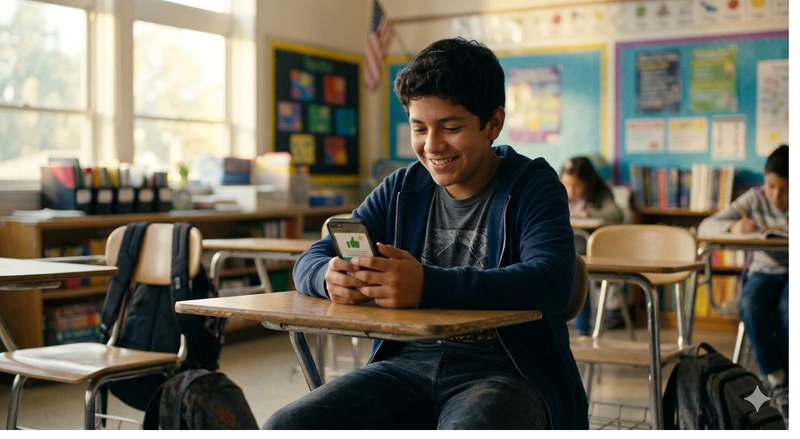
They can’t find it when it matters. A tip line printed on a poster in the counseling office is invisible at 10pm when a kid is looking at a worrying message from a classmate. If it is not reachable from the same phone, in the same moment, the impulse to report passes.
Nothing ever seems to happen. The fastest way to kill a reporting culture is for the first few brave students to report something and hear nothing back. Silence reads as “they don’t care” or “nothing changes,” and the word spreads. A tip line that cannot acknowledge a report — even anonymously — trains students to stop bothering.
It only goes one way. This is the big one, and the one most systems get wrong. A drop box takes information and closes. But real safety situations are conversations. The adult almost always needs one more detail: which student, which class, is this happening now. If there is no way to ask the anonymous reporter a follow-up question and get an answer while preserving their anonymity, the most important tips die half-told.
The features that separate real from theater
Genuine two-way anonymity. The reporter must be able to receive a reply and answer follow-up questions without ever surrendering their identity. This single capability changes a tip line from a suggestion box into an investigative tool. It is the difference between “someone might hurt themselves” and “it’s a ninth grader in Ms. Reyes’s third period and it might be today.”
Reachable where students already are. A report should be one tap from the device and app students use every day, not a separate phone number they have to look up. Friction is the enemy of reporting.
A closed loop, visible to the reporter. The student who reports should see that the report was received and is being handled, even without knowing the specifics. That acknowledgment is what sustains a reporting culture over years.
Routing to a real, named responder with a real process. A tip that lands in a general inbox nobody owns is a tip that waits. Reports need to route to specific people with clear responsibility and escalation paths, so a serious report reaches the right adult in minutes, not the next business day.
The line that matters most: tips inform people, never algorithms
Here is a principle worth holding onto as more “AI safety” products enter this space. An anonymous report is a human telling an adult that another human might be in danger. That information should go to people — trained responders who assess it with judgment, context, and care. It should not be fed into an algorithm that scores, ranks, or auto-actions students. A child flagged by a black-box model on the strength of an anonymous tip has been placed under suspicion by a machine no one can question, on the word of a report no one can verify. That is not safety. It is the automation of accusation.
The right posture is simple to state and worth insisting on with any vendor: a tip line surfaces information to trained humans who decide what to do. AI, if it is anywhere in the loop at all, might help organize or route — never judge. Tips inform people, not algorithms. A student’s future should never turn on a score.
Anonymity is not a loophole for harm
One honest caveat. Anonymous channels can be misused — false reports, harassment dressed up as a tip. A serious system accounts for this not by unmasking reporters, which would destroy the whole value, but through human review, corroboration before consequences, and a culture that makes clear the channel is for safety, not settling scores. The answer to misuse is good process on the receiving end, not surveillance on the sending end.
What to ask a vendor
- Is the anonymity real and, just as important, does it feel real to a student deciding whether to report?
- Can a responder ask the anonymous reporter a follow-up question and get an answer?
- Can students reach it from the app and device they already use, at 10pm, in two taps?
- Does the reporter get an acknowledgment that closes the loop?
- Do reports route to specific trained humans with escalation paths — and is the whole thing designed so tips inform people, never an algorithm scoring students?
Bloomz’s approach to anonymous reporting — BeHeard — is built on these principles: two-way anonymity, reachable inside the app families and students already use, with tips routed to trained people rather than fed to a model. If safe reporting is on your district’s roadmap, those are the questions to bring to every conversation, ours included. And because student safety is inseparable from student wellbeing, a tip line works best alongside transparent SEL check-ins and whole-child early warning, so a concern can surface through more than one door.