 bloomz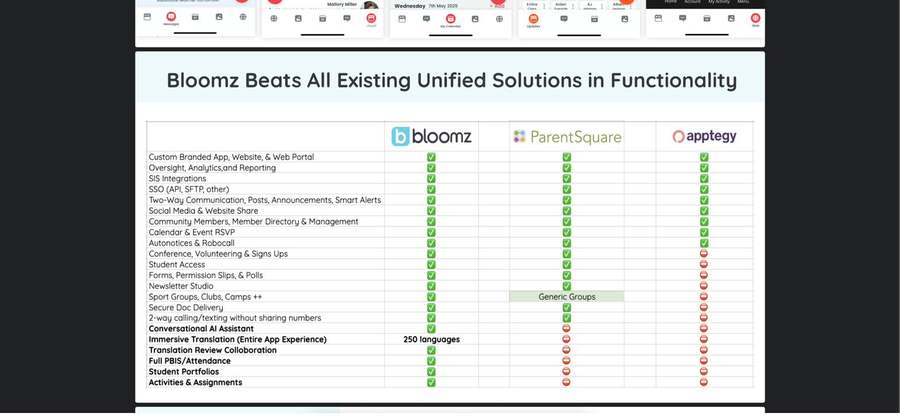
Part of our guide to funding school communication.
One of the most common questions district leaders ask about a communication platform is simple: how do we pay for it? With ESSER funds largely behind us, the answer increasingly points to recurring federal formula funds under the Every Student Succeeds Act (ESSA). A family engagement and communication platform can align with several ESSA titles. Here is a plain-English overview. Always confirm specifics with your district’s federal programs or business office, since allowable uses depend on your approved plan and local context.
Title I, Part A: family engagement
Title I, Part A is the largest federal K-12 program, and it carries a parent and family engagement requirement. Districts that receive more than $500,000 in Title I funds must reserve at least 1% for family engagement activities, and the majority of that reserve flows to schools.
A communication and engagement platform supports the core goals of this set-aside: building two-way communication with families, sharing student progress, and reaching every household, including those that are hard to reach. Because Bloomz is free for parents and reaches families in their home language, it directly supports the equitable family engagement Title I is meant to fund.
Title III: English learners and multilingual families
Title III funds programs for English learners and immigrant students, and it explicitly covers parent, family, and community engagement for those families. Translation and interpretation are central allowable uses.
This is where immersive translation matters. Bloomz localizes the full app experience in 250+ languages, not just the text of a message, across app, email, SMS, and voice. For a Title III program, that means families of English learners can fully use the platform in their home language, which is exactly the outcome the funding is designed to produce.
Title IV, Part A: student support and academic enrichment
Title IV, Part A, the Student Support and Academic Enrichment grant, supports three broad areas: a well-rounded education, safe and healthy students, and the effective use of technology. A unified communication platform can fit under safe and healthy students (timely safety and attendance communication) and the effective-use-of-technology component.
If your district runs PBIS or positive school-culture initiatives, the behavior and recognition tools built into Bloomz can also align with the safe and healthy students priority.
A quick eligibility checklist
Before you submit, work through these with your federal programs office:
- Is the platform named or supported in your approved Title I, III, or IV plan or application?
- Does it address an identified need in your needs assessment (family engagement, English learner access, school safety, attendance)?
- Is the cost reasonable, necessary, and allocable to the funding source?
- Are you avoiding supplanting, using federal funds to add capacity rather than replace local spending?
Why this matters for total cost
Districts often pay separately for communication, translation, and behavior tools. Consolidating them into one platform like Bloomz can reduce total cost while making the spend easier to map to a single funding source. Transparent, per-student pricing that starts at $3 per student per year also makes budgeting and grant alignment straightforward.
Talk to Bloomz about funding-aligned pricing for your district
This article is general guidance, not legal or financial advice. Allowable uses of federal funds depend on your district’s approved plans and applicable state and federal rules. Confirm with your federal programs or business office before purchasing.