
Part of our guide to school translation and language equity.
Ask a district how many languages its families speak and you will often hear a confident “Spanish, and a little of something else.” Then you pull the home-language survey data and find eighteen languages, a dozen of them spoken by only a few families each. That long tail is exactly where districts tend to underestimate themselves, and it is exactly where families fall through the cracks, because a platform that covers your top three languages can still be failing the families who speak the other fifteen.
Start with the data you already have
You do not have to guess your language footprint. You almost certainly already collect it.
Home-language surveys
Every family that enrolls fills out a home-language survey at registration. That form is the legal and practical starting point for identifying what languages your community actually speaks at home, and it captures languages well beyond the ones staff hear in the hallway. Pull the aggregate, not the impression.
Your student information system
Your SIS holds home-language and English-learner flags per student, which means you can produce a real count: how many families, by language, across every school. This is the difference between “we have some Arabic families” and “we have 240 students from Arabic-speaking homes across four buildings.” One is a vibe, the other is a plan.
When you run that report, two things usually surprise people. The total number of languages is higher than expected, and the distribution has a long, thin tail: a few large groups and then a scattering of languages with just a handful of families each.
The long tail is the whole point
Here is the trap. A district looks at its distribution, sees that Spanish covers most English learners, decides a platform with “top languages” support is good enough, and signs. The families in the tail, the ones who speak Pashto or Haitian Creole or Karen or Amharic, were precisely the families least likely to have another way in, and they just got left out by a procurement decision.
Those small groups are not a rounding error you can ethically ignore. A family that speaks a language shared by only five other families in your district is often the most isolated family you have. They are least likely to know an English-speaking neighbor at the school, least likely to have informal interpreters, least likely to navigate an English-only app. A platform that serves them is doing the most important work precisely where the numbers look smallest.
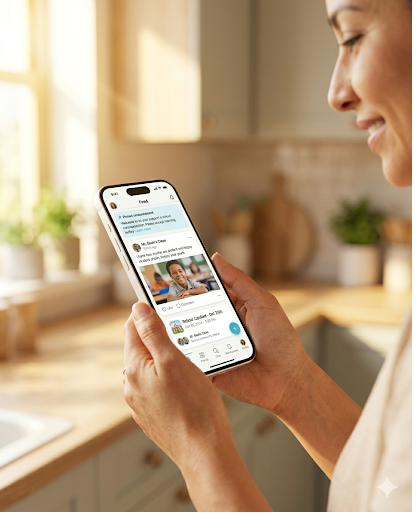
So the right question is not “does this cover most of our families.” It is “does this cover every language a family in our district actually speaks.” Bloomz immersive translation is built around that standard, with full-app translation across 250-plus languages rather than a curated handful, so the tail is covered, not just the head.
Why “top 3 languages” coverage leaves families out
Some platforms advertise translation but quietly support a limited set of languages, often the most common ones nationally. That sounds reasonable until you overlay it on a real community. Your district’s tail may include languages that vendor never built for, and there is no graceful degradation: a family whose language is not on the list gets English, full stop. The platform did not “mostly” serve them. It did not serve them at all.
The other quiet failure is partial translation. A platform might list a language but only translate message text, leaving the menus, forms, and buttons in English. For a small-tail family with no fallback, that is barely better than nothing. This is the message-versus-full-app distinction, and it matters most for exactly the families with the least margin for confusion.
Check the actual list against your community
This is a five-minute exercise that catches expensive mistakes. Take your home-language report, the real list from your SIS, and check it line by line against the platform’s published languages.
Get the platform’s real language list
Do not accept “hundreds of languages” as an answer. Ask for the actual list. Bloomz publishes its supported languages list so you can do this check directly rather than taking a salesperson’s word for the count.
Match it against your tail, not your top
Anyone covers Spanish. The test is your rarest languages. Find your five smallest language groups and confirm each one appears, in full-app translation, not just message text.
Confirm right-to-left languages are done properly
Arabic, Urdu, Farsi, and Hebrew read right to left, which means the entire layout has to mirror, navigation and reading order included, not just the text get pasted into a left-to-right screen. A platform that lists Arabic but renders it in a left-to-right shell has not actually supported those families. We walk through what good looks like in reaching Arabic and Urdu-speaking families. Ask to see it live, on a real screen.
Plan for change
Refugee resettlement, new employers, and shifting migration can add a language to your district in a single enrollment season. A platform with broad, long-tail coverage absorbs that automatically. A platform with a fixed short list means a procurement conversation every time your community changes.
The honest answer to “how many languages does your district need” is: as many as your families actually speak, which is almost always more than you think and almost always includes a long tail of small, isolated groups who need it most. Pull your home-language data, count the real number, and hold any platform to that full list rather than its top few. The families in the tail are the ones who will notice the difference first.
Bring your home-language list and we will check it against ours, language by language. Schedule a demo.