
Most behavior problems a district faces are not new. What changes is whether the adults respond to them consistently, track what is working, and loop families in fast enough to matter. Positive Behavioral Interventions and Supports, almost always shortened to PBIS, is the framework districts use to make that response systematic instead of improvised. This guide covers what PBIS is, how to roll it out across schools, how the tiers and MTSS fit together, why recognition has to reach families in a language they read, and how to evaluate the software you put underneath it all.
What PBIS Is and Why Districts Adopt It
PBIS is a framework for teaching and reinforcing expected behavior the same way you teach reading: define what good looks like, model it, recognize it when it happens, and intervene early when it does not. It is not a curriculum or a single program you buy. It is a structure for how every adult in a building responds to behavior so students get a predictable, fair experience.
Districts adopt it for a few practical reasons. Office referrals and suspensions drop when expectations are taught and reinforced rather than assumed. Staff spend less time reacting to the same incidents because the data shows them where problems cluster. And leaders get something they rarely have on the behavior side: numbers they can act on. A district that benefits from a coordinated approach sees results compound across buildings rather than living in one strong principal’s office, which is the core argument for going district-wide, covered in depth in how a district benefits from district-wide PBIS.
District-Wide vs School-by-School Rollout
You can implement PBIS one school at a time or as a coordinated district initiative. Both are real options, and the right one depends on your capacity.
School-by-school rollout lets an eager building move first and prove the model. The downside is drift. Each school defines expectations differently, names its recognition system differently, and tracks data in its own spreadsheet. When a student transfers across town, none of it follows them, and the district has no comparable picture across buildings.
District-wide rollout asks more upfront. You need a steering team, a shared set of expectations that still leaves room for each school’s culture, common data definitions so a “major” referral means the same thing everywhere, and a single system of record. The payoff is comparability and economy of scale. You train once, you report across the whole district, and a family that moves between your schools sees a consistent approach. Most districts land on a phased version: a first cohort of schools in year one, the rest in year two, all on the same framework and the same tooling.
The Tiers and How MTSS Fits
PBIS is built on three tiers, and they map directly onto a Multi-Tiered System of Supports.
Tier 1: Universal
Tier 1 is for everyone. It is the school-wide expectations, the teaching of those expectations, and the positive recognition that reinforces them day to day. Done well, Tier 1 meets the needs of roughly 80 percent of students. If your Tier 1 is weak, every higher tier gets overloaded with students who only needed clear expectations and consistent acknowledgment.
Tier 2: Targeted
Tier 2 supports the smaller group who need more than the universal system. Think check-in/check-out routines, small groups, and targeted skill instruction. The trigger for Tier 2 is data, not a hunch, which is why your tracking matters.
Tier 3: Intensive
Tier 3 is individualized support for students with the most significant needs, often involving a behavior plan and outside services. Fewer students, more intensive, more documentation.
MTSS is the larger umbrella that holds academics, behavior, and social-emotional support in the same tiered logic. PBIS is the behavior expression of MTSS. When the academic and behavior data sit on one student record, a teacher can see that the reading intervention and the behavior plan are happening to the same child, at the same time, for related reasons. For two concrete walk-throughs of moving a student through targeted and intensive support, see using Bloomz PBIS tools for interventions.
Positive Recognition Has to Reach Families
Here is where many PBIS implementations quietly stall. The points and the praise stay inside the building. A student earns recognition at 10 a.m. and the family never hears about it, so the reinforcement that should extend into the home never does.
Recognition that reaches home does real work. It builds the home-school relationship before there is ever a problem to discuss, and it gives families something positive to reinforce. But reach is the catch. In a district where families speak a dozen languages, a note home in English only reaches some of them. The family that most needs to feel included in a positive system is often the one the message never lands with.
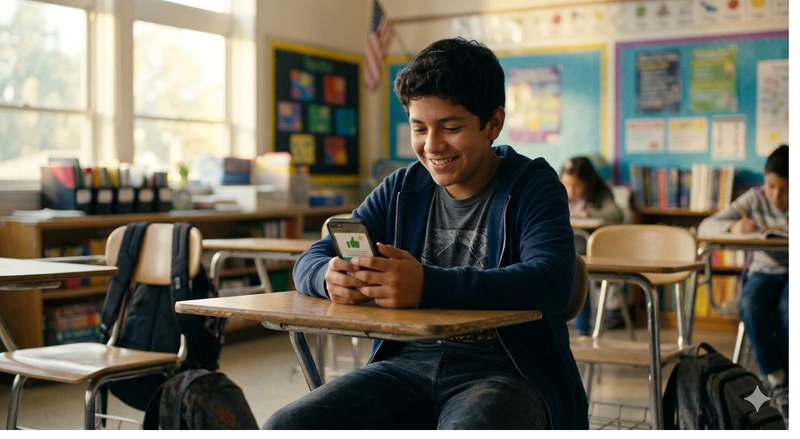
This is the case for behavior tools that live on the same platform as communication and translation. When a teacher awards a point, the family gets the message in the language they actually read, in the same app where they get everything else from the school. With Bloomz attendance, behavior, and SEL on one student profile, the recognition and the notification are the same action, and full-app translation across 250-plus languages means the message arrives readable, not as English text the family has to copy into a separate translator.
The Cost Case: Integrated vs Standalone Behavior Tools
Behavior software is often sold as its own product, separate from your communication platform. That is a budget decision dressed up as a feature decision, and it usually costs more than the line item suggests.
A standalone PBIS tool means a second contract, a second login, a second roster sync to maintain, and a second vendor relationship. It also means the behavior data and the communication data do not talk to each other, so the positive point a student earns cannot automatically become a message home without staff doing it by hand. You are paying for a tool, paying again to connect it to your communication, and paying a third time in staff time.
When behavior is native to the communication platform, you buy one thing. The recognition and the message are a single workflow, the roster syncs once, and there is no integration to break. The pattern of being charged twice, once for communication and again for a behavior add-on or a separate vendor, is laid out plainly in the double charge of a separate PBIS tool. For a district weighing whether to add a behavior product on top of what it already pays for messaging, that piece is worth reading before signing anything.
How to Choose PBIS Software
A few questions separate tooling that supports the framework from tooling that just stores points.
Does behavior live on the same student record as attendance, communication, and SEL, or is it a silo? Can recognition reach families automatically, in their language, without a teacher re-typing anything? Are the data views built for the tiers, so you can actually see who needs Tier 2 and whether interventions are working? Is the pricing published and predictable, or is behavior an upsell with a quote attached? And does the platform meet the compliance bar a district requires, including FERPA and COPPA, with student data hosted on SOC 2-certified cloud infrastructure?
If a vendor answers those well, you have a tool that supports PBIS as a system rather than a digital sticker chart.
PBIS works when it is consistent, data-driven, and connected to the families it is meant to serve. The framework is the easy part. Making it stick across every building, and making sure the positive moments reach home in a language families read, is where the right platform earns its place. If you want to see behavior, attendance, SEL, and communication working on one student record without a second vendor, Schedule a demo.