
Part of our guide to SEL in K-12.
Social-emotional learning that only reaches English-speaking families quietly fails the families it was meant to help most. A district can run a strong SEL program, recognize competencies daily, and share that growth with parents, and still leave a large share of its community out of the conversation. The students whose families do not read English fluently are often the same students for whom a strong school-home connection matters most. When SEL recognition arrives in a language a parent cannot read, the equity goal at the heart of the program gets lost on the way home.
Why Untranslated Recognition Fails the Families It Should Reach
Recognition does its real work when a family receives it and acts on it. A note that a child showed leadership or worked through frustration gives a parent something specific to be proud of and to reinforce at home. That loop is the whole point. It closes only if the parent can read the message.
Send that recognition in English to a household that speaks Vietnamese, Somali, or Spanish, and the loop breaks. The parent sees that the school sent something, cannot tell what it says, and sets it aside. Worse, the pattern repeats. Over time, those families learn that school messages are not really for them, and they disengage from exactly the kind of communication SEL programs depend on. The families who would benefit most from the connection are the ones the connection keeps missing.
This is not a fringe case. In many districts, multilingual families are a large and growing share of the community. An SEL program that reaches only English-speaking homes is not a program with a small gap. It is a program serving a fraction of the families it claims to.
Equity Is Not an Add-On
It is tempting to treat translation as a finishing touch, something to handle for the handful of families who request it. That framing gets the equity argument backward. If SEL is about helping every student develop, then SEL communication has to reach every student’s family. A program that is excellent for English-speaking households and silent for everyone else is not equitable SEL with a few gaps. It is a partial program wearing the language of a universal one.
The standard worth holding is simple. Every family should receive recognition and SEL communication in the language they actually read, automatically, without having to ask and without a staff member translating one message at a time. Anything short of that builds the inequity into the system, no matter how good the intentions behind it.
Translation Built Into the Flow
Manual translation cannot meet this standard. Asking a bilingual staff member to translate each recognition note does not scale past a few classrooms, introduces delay, and concentrates the work on a few overburdened people. The moment recognition is supposed to happen in is gone by the time a manual translation goes out.
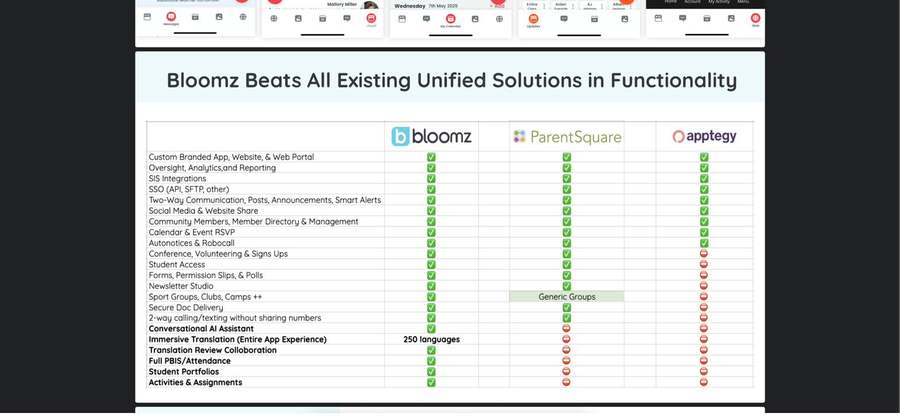
The standard is only reachable when translation is built into the platform itself. Bloomz SEL keeps behavior and SEL recognition on one student record, and immersive translation carries that recognition to families in 250+ languages, with right-to-left support, automatically. A teacher recognizes a student’s perseverance in the same quick flow they already use, and the family reads it in their own language the same day. No separate step, no waiting on a coordinator, no family left out because their language was not the default. The recognition lands at home, in a language the parent reads, while it still matters.
Cultural Responsiveness Beyond Words
Translation is the foundation, and it is not the whole of it. Reaching families in their language opens a door that cultural responsiveness then has to walk through. The way a family understands and talks about emotions, perseverance, or respect is shaped by culture as much as language. Recognition that arrives in the right language but ignores that context can still feel generic.
The practical move is to let translated recognition become a two-way conversation rather than a one-way notice. When a parent can read a recognition message and reply in their own language, and a teacher can read that reply in English, families get to add their own context. A parent might explain what a behavior means at home, or share something a teacher could not have known. That exchange is where cultural responsiveness actually happens, in the dialogue translation makes possible.
Practical Steps to Get There
Start by looking honestly at your data. Pull the home languages across your district and compare that against the languages your SEL communication actually goes out in. The gap is usually larger than staff assume. Then make automatic translation the default for SEL and recognition messages, not an exception families have to request. Enable two-way replies so families can respond in their language and staff can read those responses without friction. Finally, watch engagement by language group over time. If recognition is now reaching families it used to miss, you will see it in opens, replies, and the conversations that follow.
For a fuller picture of how recognition carries home and why that connection matters, see bringing SEL growth home to families.
Equitable SEL is not measured by the quality of the program inside the building. It is measured by whether the families on the other end can read what you send them and respond. Translate recognition into every family’s language, make it automatic, and open the door to replies, and SEL finally reaches the students who need the connection most. To see how Bloomz makes that the default, Schedule a demo.