 bloomz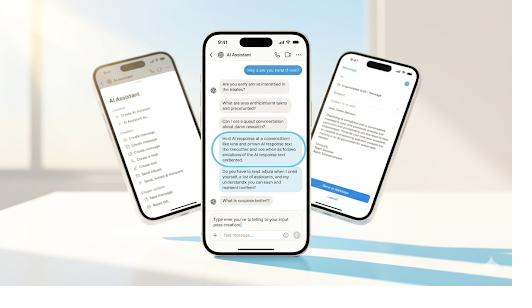
Part of our PBIS for Districts implementation guide.
A points dashboard that lives only inside the school building is doing about half the work it could. Most PBIS programs track positive behavior with care: students earn recognition, staff log it, and the data rolls up into tidy reports for the leadership team. Then the day ends, students go home, and the families who could turn one good moment into lasting reinforcement never hear a word about it.
That gap is where a lot of behavior programs quietly lose their power. Recognition shapes behavior most when it gets repeated, and the people best positioned to repeat it are the ones a student goes home to.
What family connection adds to PBIS
PBIS rests on a simple idea: catch students doing the right thing and name it, so the behavior happens again. The naming matters more than the points. When a fourth grader helps a classmate and a teacher acknowledges it, that acknowledgment is the reinforcement. A second acknowledgment at the dinner table compounds it.
A parent who hears “your daughter was recognized for helping a new student today” can do something a teacher cannot. They can connect the behavior to family values, ask about it, and bring it up again next week. One classroom moment becomes a conversation that stretches across days. That is the multiplier most schools leave untouched.
It also changes how families see the school. Many parents only hear from school when something has gone wrong. Flip that pattern, and the relationship shifts. A family that gets a positive note in March is a family that opens the next message, answers the next call, and shows up for the next conference.
When recognition stays inside the building
Picture a school with a strong PBIS rollout and no path home. Staff log thousands of positive points a year. The data looks excellent. Tier 1 fidelity is high. And almost none of it reaches a single parent.
The students still benefit from in-the-moment recognition, so the program is not worthless. But the reinforcement stops at dismissal. The behavior that earned a point on Tuesday gets no echo at home, no follow-up, no second voice telling that student the choice mattered. The school is generating exactly the kind of good news families rarely get and keeping it locked in a database.
This is usually not a decision anyone made. It is friction. Sending individual positive notes by hand is slow, and a teacher with twenty-eight students will not write twenty-eight notes a week on top of everything else. So the notes do not get sent, and the connection home stays theoretical.
The equity problem hiding in recognition
Now add language. In a school where some families speak English and many speak Spanish, Arabic, Vietnamese, or Haitian Creole, the question is not only whether recognition reaches home. It is which homes.
When positive communication depends on a teacher finding the time and the words, English-speaking families tend to hear more. They are easier to call, easier to email, easier to catch at pickup. Multilingual families, the ones who often already feel less connected to the school, hear less. Over a year, the students whose families would benefit most from a steady stream of good news get the least of it.
That is an equity failure built quietly into the recognition system itself. A behavior program meant to support every student ends up reinforcing some students at home far more than others, sorted by the language their parents speak. No one designed it that way. It is what happens when reaching home is left to chance and effort.
How translated positive notes change the equation
The fix is to make recognition reach home automatically and in the family’s language, with no extra step for the teacher. When a staff member logs a positive behavior, that moment can trigger a note to the family, delivered in the language they read.
Bloomz behavior and SEL keeps behavior on the same student record as attendance and family communication, so a logged positive does not sit in a separate system waiting to be exported. It is already part of the student’s story and already connected to the family. Pair that with immersive translation across 250-plus languages, including right-to-left scripts, and the Arabic-speaking family reads the recognition in Arabic without anyone translating by hand.
The teacher’s workload does not grow. They log the behavior the way they already do. The translation and the delivery happen underneath. A Spanish-speaking parent and an English-speaking parent get the same good news on the same day, each in their own language. The equity gap closes not through extra effort but through a system that treats every family as a default recipient.
This is also why behavior and communication work better on one platform than stitched across several. When they are unified, recognition flows home as a natural consequence of logging it. The same logic applies to social-emotional learning, which is why SEL belongs on the same platform as communication rather than in a tool no parent ever sees.
Making it practical
A few moves make recognition reach home without burdening staff. Decide which positive behaviors trigger a family note, so teachers are not flooded and families are not overwhelmed. Lean on automation for translation and delivery rather than asking bilingual staff to carry it. Set the expectation that positive communication is part of PBIS, not an extra. And watch the open rates from multilingual families, because that number tells you whether recognition is actually landing.
Recognition that stays in the building reinforces students for a moment. Recognition that reaches home in the family’s language reinforces them for the week, and it does it for every family equally. If your behavior program logs the good news but never sends it, the most valuable part is the part you are missing.
See how behavior, communication, and translation work on one student record. Schedule a demo.