 bloomz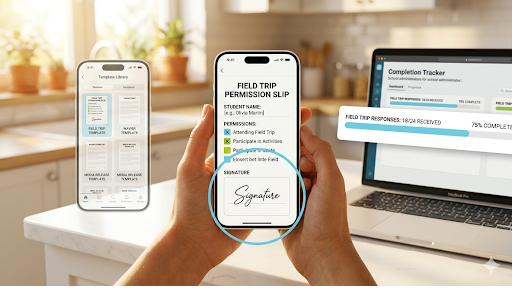
Most districts do not pick a communication platform once. They pick three or four over a decade, swapping tools as needs grow, contracts lapse, or a board member asks why families still are not hearing from the school. The churn is expensive, and a lot of it comes from buying on a demo rather than on a framework. This guide gives you the framework. It is meant to be even-handed, so you can score any vendor, including Bloomz, against the same questions.
The market has real options, and several of them are good at what they do. The trick is matching the tool to what your district actually needs over the next three to five years, not to whichever feature looked shiny in a 30-minute call.
The criteria that actually separate platforms
A few categories tend to drive long-term satisfaction far more than the feature checklist a sales team will hand you.
Translation depth
Almost every platform claims translation. The question is how much of the experience gets translated. Many tools, including ParentSquare with its advertised 190-plus languages, translate the text of a message. The buttons, menus, navigation, permission slips, and event sign-ups around that message often stay in English. For a parent who reads Arabic or Vietnamese, a translated message inside an English app is still a wall.
Bloomz takes a different approach with full-app immersive translation across 250-plus languages, including right-to-left layouts, so the interface itself renders in the family’s language. When you evaluate, ask each vendor to show you the parent app set to a language you do not read, then try to RSVP to an event. That one test reveals more than any slide.
Behavior, PBIS, and SEL on the student record
Communication and behavior data usually live in separate systems, which means teachers re-enter the same information twice and nobody has a single view of the student. ClassDojo built much of its reputation on classroom behavior points and does that piece well at the elementary level. ParentSquare, strong as it is on messaging, has no native PBIS. Bloomz keeps behavior, PBIS, and SEL on one student record alongside communication, which matters most for districts running a formal PBIS framework that want the same record from kindergarten through graduation.
Pricing transparency
This one is simple to test and surprisingly revealing. Can you find the price on the website? Several major vendors are quote-only, which usually signals pricing that varies by how hard you negotiate. Bloomz publishes its pricing, starting at $3 per student per year, with free accounts for parents. Published pricing is easier to budget, easier to defend to a board, and easier to lock for multi-year planning.
Scope and consolidation
Districts commonly run five to seven separate tools for messaging, conferences, forms, behavior, newsletters, and translation. Each carries its own contract, login, and training burden. A platform that genuinely replaces several of those tools can lower the total bill even if its per-student price is not the lowest line item. Count the tools you would retire, not just the sticker.
Security and compliance
Confirm FERPA and COPPA compliance, ask about iKeepSafe certification, and ask where the data is hosted. Bloomz is FERPA and COPPA compliant, iKeepSafe certified, and runs on SOC 2-certified cloud infrastructure. Be precise in your own RFP language here: hosting on SOC 2-certified infrastructure is not the same claim as the vendor itself holding a SOC 2 report, and a careful buyer asks vendors to clarify exactly which they mean.
Implementation and adoption
The best platform fails if families never log in. Ask about SIS integration, rostering, onboarding support, and, critically, what adoption looks like 90 days after launch. A tool teachers already like tends to pull families in faster than one mandated from the top.
Where the main players tend to fit
This is a high-level read, not a verdict. Every district is different.
ParentSquare is a capable district-wide mass-communication system with broad reach and a large install base. It acquired Remind in 2023, so the two are now part of the same company. It fits districts whose primary need is reliable outbound messaging and who do not need native behavior tools. For a closer look, see Bloomz vs ParentSquare, and if you are actively shopping replacements, the best ParentSquare alternatives lays out the field.
ClassDojo is strong in elementary classroom culture and behavior points, with high teacher affinity. It tends to fit single schools or younger grades more than coordinated district operations. The trade-offs are covered in Bloomz vs ClassDojo.
Remind, now part of ParentSquare, built its name on simple teacher-to-family texting. Districts that loved its lightness sometimes find the post-acquisition direction worth a fresh comparison, which is what Bloomz vs Remind walks through.
Apptegy leans toward district branding, websites, and a polished communications presence, often appealing to communications departments. If that is your context, Bloomz over Apptegy explains where the priorities diverge.
SchoolMessenger is a long-standing notification and mass-messaging system, frequently bundled with other district software. It does broadcast well and is less oriented toward two-way engagement or behavior.
Bloomz aims to be the single platform that covers communication, translation, behavior and PBIS, conferences, and forms together. It fits districts tired of stitching point tools and serving multilingual families who need more than translated message text. You can see the full scope on the Bloomz platform overview.
How to run the evaluation
Score, do not browse. Build a simple rubric from the criteria above and weight the two or three that matter most to your district. A high-multilingual district should weight translation depth heavily. A district rolling out PBIS should weight the behavior record.
Then run the same three tests on every finalist. Set the parent app to a language nobody on your team reads and complete a real task. Ask for the published price in writing and ask whether it locks for the contract term. List every existing tool the platform would let you cancel, and price the difference.
Pull two reference districts that resemble yours in size and demographics, and ask them about adoption at the 90-day and one-year marks, not just whether the launch went smoothly. Adoption is where most platforms quietly succeed or fail.
No single tool wins for every district, and an honest buyer’s guide will not pretend otherwise. The right move is to define your weighted criteria first, run identical tests on each finalist, and let the rubric decide. If multilingual reach, behavior on one record, and transparent pricing rank high on your list, Bloomz is built squarely for that profile, and the fastest way to pressure-test it is to see it on your own district’s terms. Schedule a demo.